God of the Gaps: On Ross Douthat's Believe
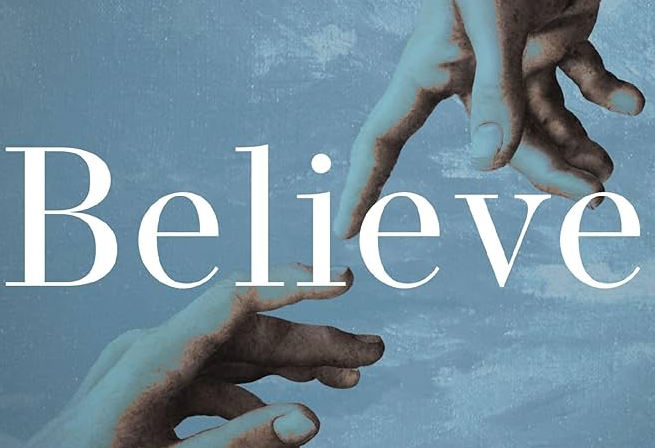
The first of two recent post-Nimbus pieces I've published is a long review-essay for the NYRB on Ross Douthat's Believe. The review appears in the issue dated today, January 15, but it's been online for a few weeks now. As I note in the piece, I'm not a fan of Douthat's rhetorical style or his politics:
Douthat’s punditry has long struck me as glib and sententious, and it particularly rankles when you notice how many of his arguments borrow the look-what-you-made-me-do rhetoric of domestic abusers and playground bullies. Whether his subject is immigration, or abortion, or gay marriage, or trans rights, or free speech, or the broad rollback of civil rights taking place under the cover of the “anti-DEI” backlash, Douthat likes nothing more than telling his liberal readers that conservative extremism is in fact all their fault.
I also loathe his politics, which have to count at this late and dispiriting date as functionally pro-fascist. Though he has dutifully registered objections to Donald Trump’s moral character, and was once a Never Trumper, in more recent years Douthat has regularly used his column to run cover for Trump’s assault on American democracy.
At the same time, I was not pre-emptively hostile to the basic case Believe wants to make:
Here it’s probably worth noting that I share Douthat’s rejection of the nihilism demanded by the scientific view. This is not a sermon, so I won’t bore you with the particulars of my own demurral. But I acknowledge this somewhat uncomfortable personal fact—uncomfortable, at least, in the context of these generally secular pages—to make it clear that, while I don’t think everyone should be religious, some part of me would have been happy to see Douthat’s book succeed.
The trouble is that Douthat is just not up to the task he sets for himself. The questions he takes up are some of the oldest and most difficult questions known to our species, and it doesn't help anyone to pretend, as he does, that they're easily resolved by simple appeals to "common sense" and "reason":
Douthat downplays all the fantastically complicated disagreements that have marked religious history for centuries. Instead he narrates a tidy tale of convergence toward a handful of broadly similar, and mostly monotheistic, major faiths. With the unearned confidence of a Whig historian, he allows himself grand and absurd pronouncements like “The more popular, enduring, and successful world religions are more likely than others to be true” and “If God cares about anything, He cares about sex.” Claims like these are so theologically preposterous, especially coming from a practicing Catholic, that it’s hard to know quite what to make of them. If nothing else, though, they reinforce my sense that the existence of Believe is its own best counterproof: in a world where religious truths were as obvious and reasonable as Douthat wants them to be, there would be no need for him to write it.
Nor does his complacent and enervating conception of what it means to be religious strike me as a very compelling case for religion or as a fair rendering of what most religions actually teach:
Religion—real religion, not Douthat’s complacent abstraction—is weirder, wilder, more violent, and more destabilizing than Believe would have us believe. Think of Abraham and Isaac on Mount Moriah. Think of Muhammad’s Mi‘raj. Think of Jesus’ teaching that we must love our enemies, hate our families, and sell everything we own. Think of all the many religious teachers who insist that genuine encounters with the divine are humbling, surprising, and very often terrifying. They promise nothing like the smug self-aggrandizement Douthat appears to demand from faith.
You can read the whole thing (for free, though you'll have to register to get behind the paywall) at the NYRB.
